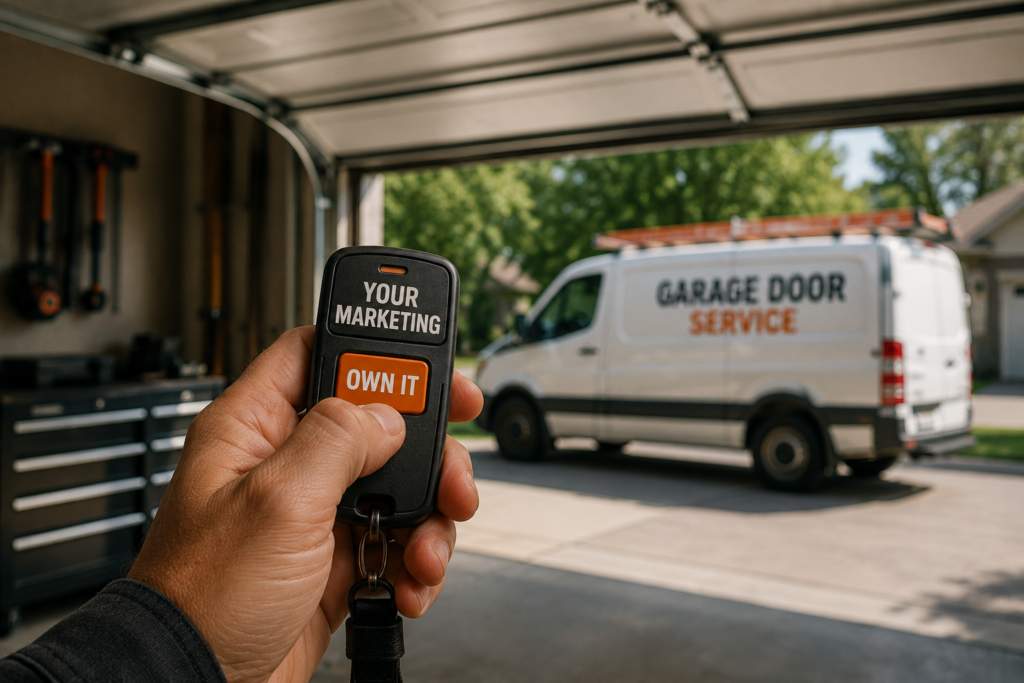
Lead platforms can generate jobs.
But there’s a big difference between buying access to leads and building a marketing system that helps customers find your business directly.
If most of your pipeline depends on lead sellers, another company sits between you and the homeowner.
When you invest in Google Search, Maps, your website, reviews, paid search and AI visibility, you’re building demand around your own business.
That’s what we mean by: own your marketing.
A Lead Isn’t a Booked Job
A lead comes in. Now what?
Your team may still need to reach the homeowner, get a response, qualify the opportunity and schedule the job. And depending on where that lead came from, the homeowner may already be considering other companies.
That doesn’t make it a bad lead. It just means receiving a lead and booking a job aren’t the same thing.
This is why cost per lead alone can be misleading. A $40 lead that never answers isn’t necessarily better than a $90 lead from someone who calls your business directly and books.
The metric that matters is what happens after the lead comes in.
What Happens When the Customer Finds You?
Now consider a different path. A homeowner searches for a garage door company. They find you on Google or Maps. They check your reviews. They like what they see. They call.
The journey is simple:
Search → Your Business → Call
Your team isn’t trying to turn a name and phone number into a conversation. The homeowner has already chosen to contact you.
That’s the kind of demand worth building.
Own the Places Customers Discover You
Owning your marketing doesn’t mean owning Google. It means building visibility and marketing assets around your company instead of depending entirely on someone else to send you the next opportunity.
Your Website
Your website should help homeowners understand what you do, where you work, why they should trust you and how to contact you. It’s also where you can learn which pages, services and campaigns actually generate calls.
Google Search & Google Ads
When homeowners actively search for the services you provide, your company should have an opportunity to appear. SEO helps build organic visibility over time. Google Ads lets you capture existing search demand immediately.
Different strategies. Same goal: help the customer find your business.
Google Maps
For local searches, homeowners may evaluate your company before they ever visit your website. Your Google Business Profile, reviews, services, photos and business information all help them decide whether you’re worth calling.
Reviews
Every genuine review builds trust around your company. That reputation becomes part of your digital footprint and can influence customers wherever they discover you.
Your Data
You should know which marketing sources generate calls, which calls are qualified, which become booked jobs and what those customers are worth.
If all you know is “we got 83 leads last month,” you don’t know enough.
AI Is Changing Where Customers Start Looking
Customers don’t always begin with a traditional Google search anymore. They can ask an AI assistant: “Find a highly rated garage door company near me.”
That doesn’t mean directories are disappearing. AI-powered discovery can draw on information from across the web and other available sources, including business websites, reviews, listings, directories and third-party mentions.
Even Angi is adapting to this change, launching an Angi experience inside ChatGPT in 2026.
So the opportunity isn’t to abandon every directory. It’s to make sure your business has a strong enough digital footprint to be found wherever the customer starts looking.
Should You Stop Buying Leads?
Not necessarily. If Angi, Thumbtack or another lead source produces profitable jobs, it can absolutely have a place in your marketing mix.
But measure what it actually produces. Don’t stop at number of leads. Look at:
Contact rate → Qualified leads → Booked jobs → Revenue
Then compare that with Google Ads, SEO, Local Services Ads and your other acquisition channels.
A cheap lead isn’t valuable simply because it was cheap. The goal isn’t the lowest CPL. The goal is profitable booked jobs.
Lead Platforms Can Be a Channel. They Shouldn’t Be Your Entire Strategy.
This is the bigger point. If most of your opportunities come from one lead provider, your growth depends heavily on a system you don’t control.
Prices can change. Competition can change. Policies can change. Lead volume can change.
Instead, build multiple ways for homeowners to discover your company:
- Google Search
- Google Ads
- Google Maps
- Local Services Ads
- Your website
- Reviews
- Relevant directories
- AI discovery
- Referrals
Lead marketplaces can be part of that system. They just shouldn’t be the system.
Own Your Marketing. Own Your Growth.
You don’t need to stop buying leads tomorrow. You need to build something alongside them.
Build your search visibility. Build your reviews. Build your website. Build your data. Build a brand homeowners can find directly. And keep using third-party lead sources when the numbers make sense.
Because the long-term goal isn’t simply to receive more leads. It’s to become the company customers find.
Frequently Asked Questions About Owning Your Marketing
What does it mean to “own your marketing”?
Owning your marketing means building demand around your own business instead of depending entirely on third-party sources to deliver opportunities.
Your website, content, reviews, customer data, tracking, brand presence, and organic visibility become assets that continue supporting the business over time.
It doesn’t mean avoiding every outside platform. Google Ads, Local Services Ads, directories, and lead platforms can all have a role. The goal is to avoid having your entire customer acquisition system controlled by someone else.
Should garage door companies stop buying leads?
Not necessarily.
Third-party leads can make sense when they produce profitable booked jobs. The problem is becoming completely dependent on them.
Garage door companies should compare lead sources based on qualified leads, booking rate, cost per booked job, and revenue, not simply cost per lead. At the same time, invest in channels that build visibility around your own company.
What is the difference between buying leads and generating your own leads?
When customers discover your company through your website, Google presence, advertising, reviews, referrals, or other marketing, they’re responding to your business and brand.
With some lead-generation platforms, the platform acquires the customer first and then passes or sells the opportunity to service providers. That can create an additional step between customer intent and your business, and some platforms may distribute the same opportunity to multiple companies.
The important question isn’t simply where the lead came from. It’s how quickly you can reach the customer, how much control you have over the customer journey, and whether the lead becomes a profitable job.
Why does speed matter for garage door leads?
Many garage door searches involve an immediate problem: a broken spring, a door that won’t close, or a vehicle trapped inside.
The longer the path between the homeowner looking for help and reaching your business, the greater the chance that they contact or book another company.
That’s why direct calls, fast response times, good call routing, and missed-call follow-up can be just as important as generating the lead itself.
What marketing assets should a garage door company own?
The most valuable assets typically include your:
- Website and domain
- Customer and first-party data
- Call and conversion data
- Content and service pages
- Brand and creative assets
- Review-generation process
- Analytics and tracking infrastructure
Profiles and visibility on third-party platforms are still important, but they should support the business rather than become the entire marketing system.
Can a garage door company own its marketing and still use Google Ads?
Absolutely. Owning your marketing doesn’t mean owning every platform you advertise on.
You don’t own Google, Meta, or other advertising platforms. But you can control your campaigns, landing pages, messaging, conversion tracking, customer data, and what happens after someone contacts your business. Paid advertising can be part of a marketing system you control.
Are Google Local Services Ads the same as buying shared leads?
No.
A homeowner can discover your business through a Local Services Ad and contact the business through the contact options Google provides. That customer journey is different from a platform that collects an inquiry and then distributes the opportunity to multiple service providers.
Different platforms operate differently, so garage door companies should evaluate each source based on how the customer reaches them and what happens to the opportunity afterward.
Should garage door companies still be listed on Angi and other directories?
Potentially, yes. Directories and third-party sites can contribute to your broader online presence and may be places where customers research local companies.
The goal of owning your marketing isn’t to disappear from other platforms. It’s to make sure customers can also discover and contact your business directly through your own website, search presence, advertising, reviews, and brand.
How can a garage door company become less dependent on lead sellers?
Start by strengthening the channels that create demand around your own company:
- Build useful service pages.
- Improve your Google Business Profile and local visibility.
- Generate genuine customer reviews.
- Run well-tracked search advertising.
- Create content around questions customers actually ask.
- Track leads through to booked jobs and revenue.
Then gradually allocate more budget toward the channels producing profitable customers and strengthening your business at the same time.
How do you know if you really control your marketing?
Ask a simple question: if one lead provider disappeared tomorrow, would customers still find your business?
If the answer is yes because you have search visibility, reviews, a strong website, advertising data, customer relationships, and multiple acquisition channels, you have a much stronger marketing foundation.
If the phone stops ringing as soon as one platform stops sending leads, the business is dependent on that platform.
Related research: Who Really Owns the Customer? , our 2026 report on lead platforms and marketing ownership.
Related: for the full channel-by-channel growth system, see our complete digital marketing guide.
Want to Know What Your Leads Are Actually Worth?
At The Garage Door Agency, we look beyond cost per lead. We connect marketing sources to qualified calls, booked jobs and revenue so you can see what’s actually growing your business, and where you’re paying for opportunities that go nowhere.